
Your LTC Data Problem Is Quietly Becoming an AI Problem
Artificial intelligence has quickly become central to how insurers think about operational modernization. Across the industry, organizations are investing heavily in AI to strengthen analytics, improve workflows, and scale operations more efficiently.
But in long term care, there is a foundational issue that deserves far more attention: operational data quality.
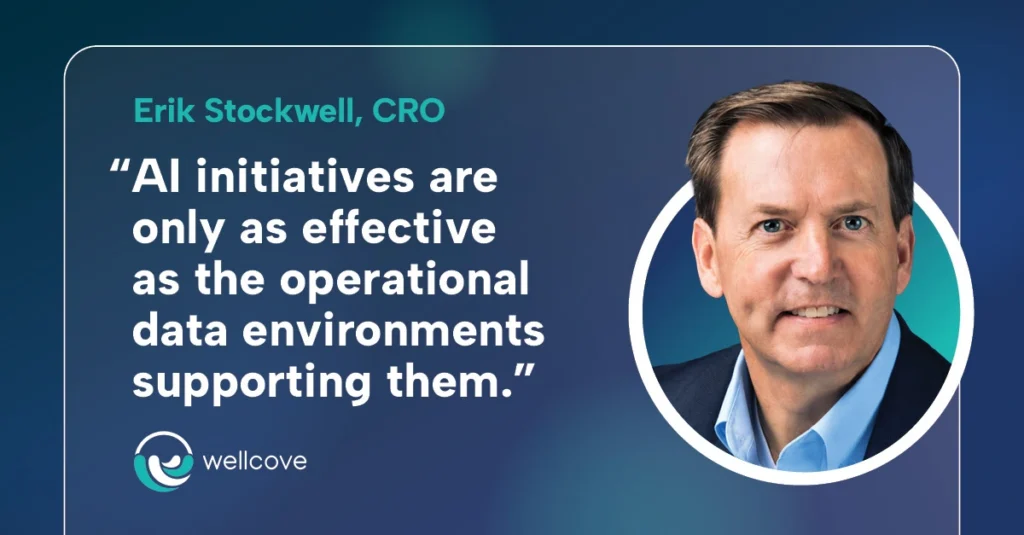
AI initiatives are only as effective as the operational data supporting them. In LTC, fragmented systems and years of manual processes often create limitations that make modernization far more difficult than expected.
We’ve seen this challenge firsthand at Wellcove. Our data fabric was designed around the idea that connected, structured operational data is needed to support future growth and AI initiatives.
As AI adoption accelerates, operational infrastructure is no longer just an administrative concern. It is becoming a business readiness issue that directly affects efficiency, forecasting, scalability, and the return organizations expect from technology investments.
That conversation is becoming increasingly urgent as long term care claims continue rising across the industry.
Annual LTC claims have increased more than 80% since 2015, while many policyholders have not yet filed a claim. Much of the industry’s future operational and financial pressure is still ahead. Yet many organizations continue managing LTC through structures built for a very different claims environment.
The organizations best positioned for the next phase of LTC growth will likely not be the ones adopting AI the fastest. They will be the ones with the operational foundation to support it effectively.
Fragmented Operations Create Long-Term Limitations
Many LTC environments have evolved over decades, creating operational ecosystems where critical information is often scattered across platforms and manual processes.
The result is operational inefficiency. Teams often spend valuable time reconciling information instead of moving work forward efficiently. AI initiatives tend to expose those underlying issues faster.
When organizations introduce automation or AI-supported workflows, inconsistent data becomes far more difficult to manage. Incomplete operational data limits how effectively newer technologies can support growth and decision-making.
LTC operations generate enormous volumes of information. The challenge is ensuring that information is organized and accessible across the organization.
Without that foundation, organizations risk investing in modernization initiatives that fail to deliver their intended value.
Legacy Infrastructure Can Quietly Slow Enterprise Modernization
Long term care administration is often treated as a contained operational function, but its impact extends far beyond the department itself.
Older LTC models frequently rely on processes that were never designed to support the level of analytics and operational intelligence organizations are pursuing today. As carriers pursue greater automation, legacy infrastructure can quietly become a barrier to modernization. This becomes especially important as organizations expand AI initiatives across the enterprise.
AI depends on information moving consistently across the organization. Without a connected data foundation, reliable analytics and automation become much harder to achieve at scale.
Organizations may invest heavily in AI tools while continuing to struggle with inefficiencies underneath them. Over time, that disconnect can reduce agility and limit how effectively organizations adapt to increasing claims complexity and future growth demands.
Data Quality Is Increasingly a Financial Leadership Issue
Operational data quality is evolving into a financial and enterprise performance issue rather than an IT concern.
Poor operational data impacts efficiency, forecasting accuracy, scalability, and the return organizations expect from technology investments. It also impacts how effectively leadership teams evaluate future claims growth and operational readiness.
For CFOs and executive leadership teams, that creates an important shift in perspective.
Operational inefficiencies often increase administrative costs over time through manual reconciliation and duplicated efforts that compound year after year.
Cleaner operational data creates a stronger foundation for automation, AI adoption, and enterprise modernization while improving visibility across the organization. Connected data environments make it easier for leadership teams to evaluate performance and derive greater value from technology investments over time.
As carriers prepare for increasing claims activity, more leadership teams will likely begin evaluating whether their operational infrastructure is truly positioned to support the next phase of enterprise transformation.
At Wellcove, our Data Fabric was built around this challenge. Creating a connected operational foundation helps organizations better support analytics and future AI initiatives without adding complexity to already demanding environments.
AI will continue to shape the future of insurance operations. The question for many carriers is whether the operational environment underneath it is ready.
As claims activity continues to increase, the organizations that invest in stronger operational foundations today will be better positioned to support AI initiatives and navigate the next phase of long term care administration.